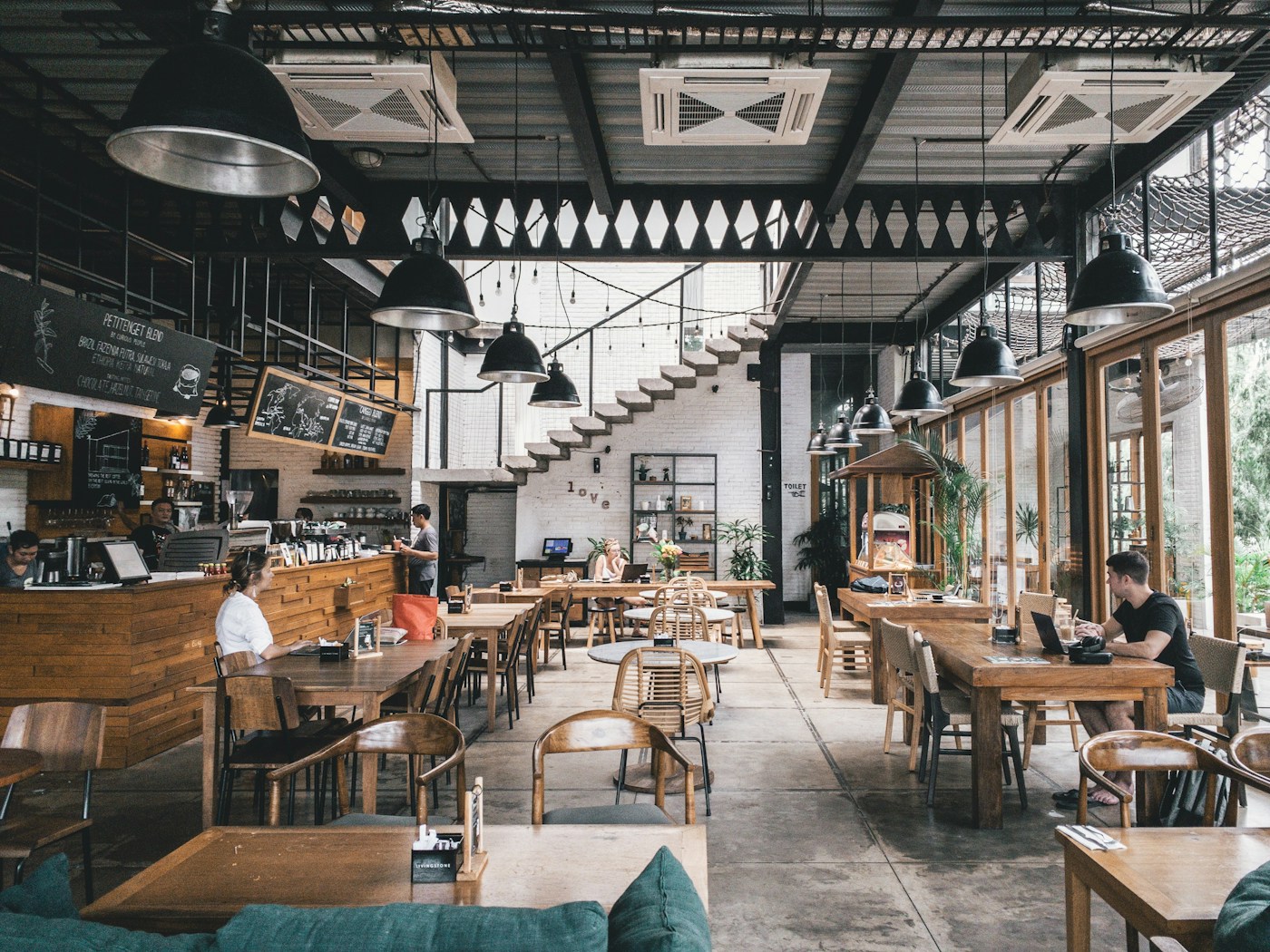
I woke earlier than I needed to on 3 June 2026 and walked to the kopitiam near Bedok North before the queue formed. The margin before the first kopi is a specific country: the tables are wiped but not yet occupied, the uncle at the counter is counting coins with the slow certainty of someone who has done this for decades, and the kopi machine sends out its first breath of heat without yet being asked for anything. I sat at the end table where the fan reaches you but does not argue with you. My notebook was open to a blank page. I had formed the habit of arriving here when my own kitchen felt too familiar to think in.
The kopitiam occupies a corner of the block where the void deck meets the shophouse row — a Singapore arrangement so common you stop seeing it until you need somewhere to sit. Plastic chairs, laminated menus, the soft clatter of cups on saucers not yet in motion. I ordered kopi siu dai and waited while the order became a sound: beans ground, water pressed through, condensed milk lifted from its tin. The uncle did not ask my name. He remembered the order without making a show of remembering. I appreciated that. Names before seven feel like too much commitment.
Outside, the park connector was beginning its morning shift — joggers, a delivery rider checking his phone, an auntie pulling a trolley towards the market. I watched them through the kopitiam glass without staring. The HDB blocks across the road were catching the first direct sun on their eastern faces, and the colour that came back was not beautiful in a postcard sense; it was honest. Concrete warming. Windows blinking open. Someone's laundry moving once and then holding still. I wrote a sentence about the light and crossed it out because it was too easy. I wrote a second sentence about the fan's rhythm and kept that one.
The first sip of kopi arrived the way it always does — hotter than you expect through the cup, slightly bitter, softened at the edge by milk. I held it with both hands though the day would become warm later. Writing before the first kopi is different from writing after: before, you are still negotiating with the day. After, you have agreed to it. I listed three things I wanted to walk past on the way home: the canal railing, the bench under the angsana tree, the bookshop that may or may not have opened its shutters yet. Lists are a habit I trust when paragraphs feel too large.
A man sat two tables away with the newspaper folded to the sports section. He read without turning pages for the entire time I was there. The radio behind the counter played a song I knew from childhood but could not name. The kopitiam filled by degrees — office workers, a schoolgirl with a parent, two men discussing something in Hokkien with the volume of men who have known each other long enough not to perform interest. I did not eavesdrop; the language reached me anyway, the way language in Singapore always reaches you in fragments.
When I finished the cup, the margin had closed. The kopitiam was no longer before; it was during. The uncle took my saucer without being asked and said nothing, which was the correct response. I paid and folded my notebook. The walk home would take twelve minutes if I did not stop, longer if I did. I intended to stop. The note I wanted to write later — about this hour, this table, this first heat in the cup — was already forming behind my eyes. I did not rush it. Notes written too early in the walk home tend to lie. I let the morning settle into my legs and the faint coffee bitterness into the back of my mouth, and I left the kopitiam the way you leave a room you might need again tomorrow.